Category: Astronomy

  • C/2025 N1 and C/2025 K1

    What are they, you would be wondering.

    If I tell you that C/2025 N1 is the designation of the third interstellar comet ever detected by humans, you would know it has the other widely known name as 3I/ATLAS. Its orbit is hyperbolic — meaning it’s moving too fast to be gravitationally bound to the Sun — and the trajectory traces back beyond the solar system. It passed inside the orbit of Mars on its path through the inner solar system, and its closest approach to Earth will be around December 19, 2025 — about 170 million miles away.

    Because it didn’t form around our Sun, its composition, structure, and behavior offer a window into how comets, and perhaps planetary systems, elsewhere in the galaxy evolve.

    The less-known C/2025 K1 is a more modest comet — a native of our own solar system’s distant Oort Cloud. Astronomers around the world watched in real time as it dramatically broke up into 3 or 4 pieces after its close approach to the Sun, between November 11 and 13, 2025, after surviving perihelion, its closet encounter with the sun.

    It’s hard not to feel a sense of cosmic humility when you think about it. In a single year — 2025 — we’ve witnessed two remarkable cosmic events: one object, voyaging across the galaxy, unbound by the Sun’s gravity; another, a quiet resident of our solar system finally succumbing to solar forces after a lonely journey from the Oort Cloud.

    It makes me wonder — out there, beyond our telescopes, how many more ices and rocks from distant stars are drifting, awaiting their turn to pay a visit to our neighborhood? ☄

  • Book Review: Alien Earths

    When I first peered through my backyard telescope at the faint smudge of the Andromeda Galaxy, I wasn’t just looking outward. Instead, I was searching inward, wondering whether somewhere in that sea of stars, another child might be gazing back, asking the same question: Are we alone? Lisa Kaltenegger’s Alien Earths: The New Science of Planet Hunting and the Search for Life Beyond Earth doesn’t just answer that question, it reframes it, transforming cosmic wonder into a rigorous, hopeful, and deeply human scientific quest.

    Kaltenegger, a leading astrophysicist and director of the Carl Sagan Institute, writes with the clarity of a teacher and the passion of a pioneer. She guides readers through the evolution of exoplanet science – from the first wobbles detected in distant stars to the atmospheric fingerprints of potentially habitable worlds. What makes Alien Earths exceptional is not just its scientific depth, but its narrative arc: it’s the story of how humanity learned to see planets we cannot visit, using light bent by gravity and spectra split by prisms, all to answer an ancient question with modern tools.

    Reading this book felt like a conversation with a mentor who understands both equations and emotions. Kaltenegger doesn’t shy away from uncertainty; she embraces it as the engine of discovery. When she describes how the James Webb Space Telescope might one day detect bio-signatures – oxygen, methane, or even industrial pollutants – in an exoplanet’s atmosphere, she doesn’t promise aliens. Instead, she offers something more profound: a methodology for hope grounded in evidence.

    This resonated deeply with my own journey. Like Kaltenegger, I began with awe – a six-year-old mesmerized by black holes at the Air and Space Museum – and gradually learned that wonder must be paired with work. In my high school astronomy club, I’ve tried to emulate her spirit: not just showing Saturn’s rings, but explaining how we know they’re there. Similarly, while analyzing public datasets on detecting Baryon Acoustic Oscillations at high redshift range, I’ve wrestled with noise, calibration, and false results —experiences Kaltenegger vividly recounts from the front lines of planet hunting. Her book validated that frustration is part of the process; every ambiguous signal is a step toward clarity.

    One of Alien Earths’ most compelling insights is its emphasis on Earth as a template – and a warning. Kaltenegger shows how studying Earth’s own atmospheric evolution helps us interpret alien skies, but also reminds us that habitability isn’t guaranteed. A planet in the “Goldilocks zone” may still be barren, just as Earth itself has teetered on the edge of catastrophe. This duality struck me as I stood on a golf course last spring, watching a thunderstorm roll in: even our stable-seeming world is dynamic, fragile, and rare. Kaltenegger’s vision isn’t just about finding Earth 2.0—it’s about understanding what makes Earth 1.0 worth protecting.

    Alien Earths is more than a science book; it’s a call to participate. Kaltenegger writes not as a distant authority, but as an explorer inviting us aboard. For students like me – tutoring in math, coding simulations, or organizing telescope nights – her message is empowering: the search for life beyond Earth belongs to all of us. It requires coders, educators, engineers, and dreamers.

    In the end, this book is a perfect reflection of why I keep looking up. The night sky is a laboratory, a testing ground, and a community. Lisa Kaltenegger’s Alien Earths is an essential guide to that cosmos, reminding us that the search for other worlds is, ultimately, a profound journey to understand our own. It is a compelling, hopeful, and brilliantly accessible work that will leave you gazing at the stars with a renewed sense of purpose and wonder.
  • Ripples of Space Time

    Ten years ago — September 14, 2015 — something remarkable happened: for the first time, humans detected gravitational waves. That moment didn’t just confirm a prediction made by Einstein more than a century earlier; it gave us a new sense. Astronomy could no longer rely on light alone. We gained ears for the cosmos.

    I was in second grade when it happened. I don’t remember the day itself — only a vague memory of my dad telling me the story months later, wide-eyed over the kitchen table. The idea stuck with me: people use telescopes to see the universe, and now, with instruments like LIGO, we can also listen to it. That small, almost-childlike astonishment grew into something deeper as I got older.

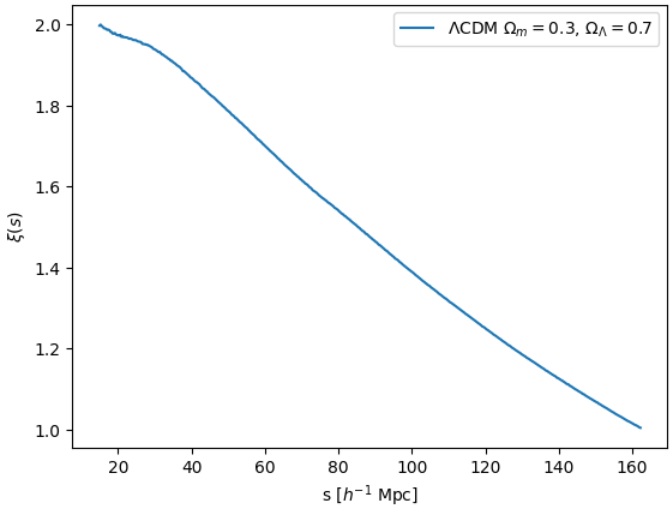
    Learning about gravitational waves opened doors to other discoveries and concepts that reshape how we think about the cosmos. I learned about gravitational radiation from merging black holes and neutron stars, and about the cosmic patterns encoded in Baryon Acoustic Oscillations that act like a ruler for the expanding universe. Each concept felt like learning a new sense or tool — a way to probe corners of reality that were previously hidden.

    The decade since that detection has been a lesson in humility and wonder. Astronomy isn’t just about better telescopes or bigger observatories; it’s about inventing entirely new languages for the universe to speak. We’ve moved from watching to listening, and with every new “note” we hear, the universe becomes a little richer, stranger, and more inviting.

    Looking back, I like to think that my childhood fascination—sparked by a late-night kitchen conversation—was the first small step in a lifelong curiosity. Ten years on, that curiosity is still here: excited by what we can see, and even more excited by what we can now hear.

  • Dream of Strings: The Elegant Universe

    After finishing the last page of The Elegant Universe, I looked up at the night sky, and the stars seemed to shine brighter than usual. As a high school student deeply interested in physics and astronomy, Brian Greene’s book not only guided me through the world of modern physics but also inspired me to reflect on humanity’s place in the cosmos.

    What attracted me most about this book is the way it explains relativity, quantum mechanics, and string theory, turning difficult science into something both exciting and inspiring. String theory—an idea that once confused me—becomes an elegant ballet of mathematics through Greene’s writing. He uses vivid comparisons to illuminate nearly incomprehensible concepts: the universe as a grand symphony, with fundamental particles as musical notes vibrating on strings, and the extra dimensions as the hidden stage where the performance unfolds. These analogies allowed me to glimpse the profound depth of modern physics.

    This book did more than just expend my knowledge. It changed my perspective on overcoming toward challenges. Physicists have been striving to find the grand unified theory of physics for many decades, and faced many failures but do not give up. This spirt of seeking truth of the universe inspire me, a student that may give up when facing difficult situation , to reignite the courage of seeking new knowledge.

    Closing the book, I realized that I may never become a theoretical physicist, but it gave me something even more valuable: an unquenchable curiosity. Gazing at the night sky, the universe still feels full of mysteries, and as Greene describes, it is these unanswered questions that make scientific exploration so captivating. Perhaps the key to understanding the universe lies hidden right before our eyes…🌌🪐💫

  • The 2025 National Astronomy Competition

    Today was the test day for the 2025 National Astronomy Competition (NAC), the second round of the USA Astronomy and Astrophysics Olympiad. This marks the fourth time I’ve made it to the second round since 8th grade, and each year still feels like a milestone.

    In the past few years—ever since the COVID-19 pandemic—the first and second rounds were administered online and proctored via video. But the rules changed this year: the NAC exam in 2025 required an in-person proctor, certified to oversee the test. That meant I had to drive to the K.W. Barrett Branch Library in Alexandria, VA, where a librarian served as the official proctor. Sitting in a quiet corner of the library, the experience felt more formal and perhaps more serious than in previous years.

    As for the test itself, it was definitely a little tougher than I expected. Some of the problems really pushed me to think deeply and apply concepts in ways I hadn’t anticipated. Still, I gave it my best effort. Hopefully, I’ll perform better this year and take another step forward in this journey.

  • Pi Day Meets a Blood Moon

    Today is March 14, 2025—𝜋 Day, a celebration of the most famous mathematical constant. But this year, the day came with an extra cosmic gift: a total lunar eclipse, also known as a blood moon, visible across much of North and South America.

    The eclipse began late on the night of March 13th and extended into the early hours of March 14th. Totality started around 2:26 a.m. EDT and lasted for just over an hour, painting the Moon in a deep red glow as Earth’s shadow passed across its surface.

    For me, this was more than just another chance to skywatch—it was an opportunity to capture the moment. Using my Pixel 6 phone attached to the eye-piece of my telescope, I was able to take my very first high-resolution photo of a blood moon. The experience of seeing the image come into focus on my screen was unforgettable, and it felt like the perfect blend of science, technology, and personal passion.

    Celebrating Pi Day with a blood moon felt like a rare alignment between mathematics and astronomy—two of my favorite worlds.

  • Book Review: Visions

    Over the past few years, I have consistently found myself returning to Visions: How Science Will Revolutionize the 21st Century by Michio Kaku, an eye-opening book published in 1998 which discusses how breakthroughs in scientific fields including nanotechnology, biotechnology, astronomy, and space exploration will change the course of humanity for the better.

    My favorite part of Visions is Kaku’s discussion of space exploration toward the end of the book, where he explains imaginative and complicated pieces of technology in a simple fashion. For instance, his mentioning of a futuristic form of interstellar space travel, the Bussard ramjet, was particularly interesting as Kaku explained how it functions by comparing it to a conventional jet engine. Despite some of these technologies being closer to science fiction than reality, Kaku does not indulge in wishful thinking; instead, he specifically describes the prerequisites needed for the creation of these advanced systems, such as advancements in energy production and materials science, which would need to precede any serious attempts at interstellar travel.

    Perhaps the most interesting part of Visions does not come from its content; instead, it comes in the form of the accuracy of Kaku’s predictions. As the book was written over 25 years ago, it reflects the prospective ideals of the late 20th century and imagines what life may be like today. For instance, Kaku’s prediction of the proliferation of gene therapy as a valid treatment for certain diseases and the creation of artificial intelligence are surprisingly correct: gene therapy was first approved in 2003 and has expanded to treat numerous previously-untreatable diseases, and ChatGPT was developed over the past three years.

    Overall, I would highly recommend Visions for readers particularly interested in seeing where humanity may be in the future. While the book is a product of its time, its optimism, depth of insight, and thought-provoking scenarios continue to inspire and fuel discussions on what science might bring to our generation and beyond.